10 Influential Muslim Figures Who Changed History Forever
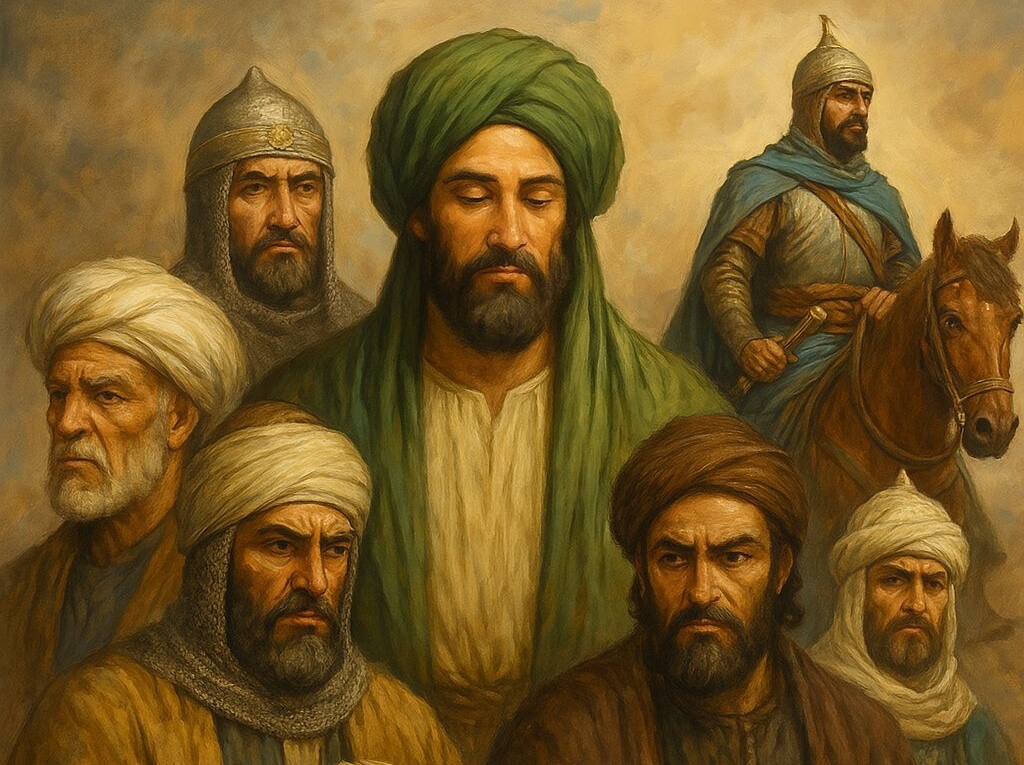
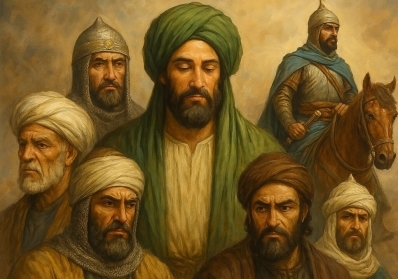
The vast and rich tapestry of Muslim history is woven with the lives and achievements of countless remarkable individuals who left an indelible mark on the world. From groundbreaking scientific discoveries to transformative political leadership and profound spiritual guidance, these figures shaped not only the course of Muslim civilization but also influenced the trajectory of global history. Here, we explore ten such influential Muslims whose impact continues to resonate today.
1. Prophet Muhammad (Peace Be Upon Him): The founder of Islam, his teachings and the Quran, which Muslims believe to be the word of God, laid the spiritual, ethical, and social framework for a global faith that continues to inspire billions. His leadership in establishing the first Muslim community in Medina also set the stage for the development of Islamic civilization.
2. Abu Bakr (c. 573 – 634 CE): The first caliph after the Prophet Muhammad, Abu Bakr played a crucial role in consolidating the early Muslim community after the Prophet's passing. His decisive leadership preserved the unity of the nascent state and initiated the early conquests that would lead to the expansion of Islam.
3. Umar ibn al-Khattab (c. 584 – 644 CE): The second caliph, Umar is renowned for his administrative genius and his pivotal role in the rapid expansion of the Muslim empire. He established key administrative and financial systems that provided the foundation for a vast and enduring caliphate.
4. Ali ibn Abi Talib (c. 601 – 661 CE): The fourth caliph and a close companion and cousin of the Prophet Muhammad, Ali is revered for his wisdom, courage, and eloquence. His caliphate was marked by internal strife, but he remains a central figure in Islamic theology and spirituality, particularly for Shia Muslims.
5. Aisha bint Abi Bakr (c. 613/614 – 678 CE): A wife of the Prophet Muhammad, Aisha was a prominent scholar and narrator of hadith (sayings and traditions of the Prophet). Her extensive knowledge and insightful interpretations played a vital role in preserving and transmitting the early teachings of Islam.
6. Harun al-Rashid (c. 763 – 809 CE): The fifth Abbasid caliph, Harun al-Rashid's reign is often considered the zenith of the Islamic Golden Age. His patronage of the arts, sciences, and philosophy led to unparalleled intellectual and cultural flourishing in Baghdad, making it a global center of learning.
7. Al-Khwarizmi (c. 780 – 850 CE): A Persian scholar who made groundbreaking contributions to mathematics. His work introduced the concept of algebra (from the Arabic "al-jabr") and the decimal positional number system with the use of zero to the Western world, fundamentally changing the course of mathematics and science.
8. Ibn Sina (Avicenna) (c. 980 – 1037 CE): A polymath of immense influence, Ibn Sina was a physician, philosopher, and astronomer. His "Canon of Medicine" remained a standard medical text in Europe and the Islamic world for centuries, shaping the development of medical knowledge and practice.
9. Saladin (Salah al-Din al-Ayyubi) (c. 1137 – 1193 CE): A Kurdish Muslim leader who became the Sultan of Egypt and Syria, Saladin is renowned for his military prowess and his recapture of Jerusalem from the Crusaders. He was also known for his chivalry and just treatment of his adversaries, earning him respect across religious lines.
10. Ibn Khaldun (1332 – 1406 CE): An Arab historian, philosopher, and sociologist, Ibn Khaldun is considered one of the forerunners of modern sociology and historiography. His seminal work, "The Muqaddimah," offered profound insights into the rise and fall of civilizations and the dynamics of social and political life.
These ten figures represent just a glimpse into the vast array of influential Muslims who have shaped history. Their contributions in fields ranging from religion and politics to science, philosophy, and culture continue to inspire and impact the world today. Exploring their lives and legacies offers invaluable insights into the richness and diversity of Muslim civilization and its enduring influence on human history.
Latest Articles

Latest Updates in Online Courses and Education.
For centuries, spanning the early caliphates through the powerful Ottoman, Safavid, and Mughal empires, the realms under Islamic rule played...
Read MoreThe Islamic Golden Age (roughly 8th to 13th centuries CE) stands as a remarkable period of intellectual flourishing, and nowhere...
Read MoreIslamic art is a captivating expression of faith, culture, and artistic ingenuity that has flourished across centuries and continents. Far...
Read MoreThe story of Islam's expansion from its humble beginnings in the Arabian Peninsula to a global faith with over a...
Read MoreOften overshadowed by dominant narratives, the early history of Islam reveals a vibrant landscape where women were not merely passive...
Read MoreWhile the European Renaissance is often credited as the birthplace of modern science, a vibrant intellectual revolution flourished centuries earlier...
Read MoreIslamic architecture is a breathtaking expression of faith, artistry, and innovation that has left an indelible mark on the global...
Read MoreFor over six centuries, the Ottoman Empire cast a long shadow across continents, its influence stretching from Southeast Europe to...
Read MoreExploring the Ancient World: Bible History & Archaeology
Uncover the people, places, and events that shaped biblical and ancient history.
Dive into a rich collection of resources on ancient civilizations, biblical archaeology, and historical contexts. From the empires of Babylon and Assyria to the life of Jesus and the early church, discover maps, timelines, commentaries, and scholarly insights that bring the ancient world to life. Explore the intersection of faith, history, and archaeology with our curated articles, maps, and studies.