How Islamic Golden Age Scholars Revolutionized Medicine and Mathematics
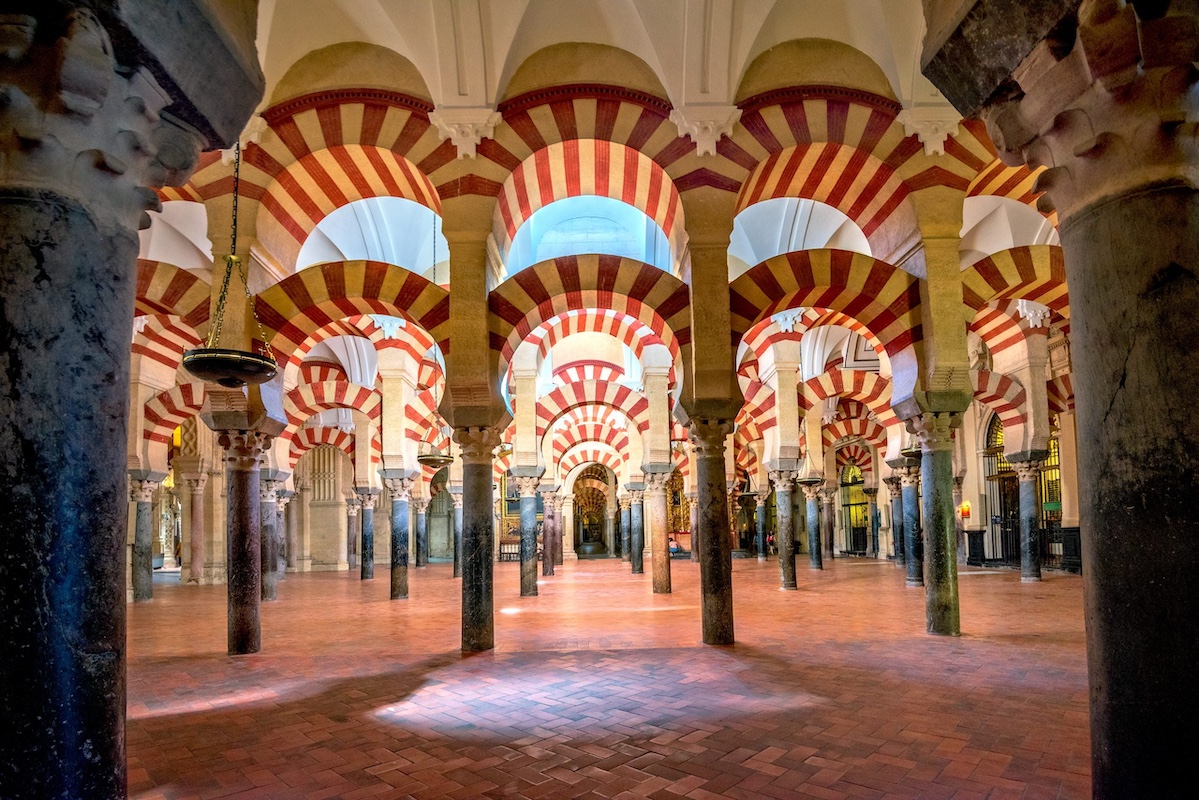
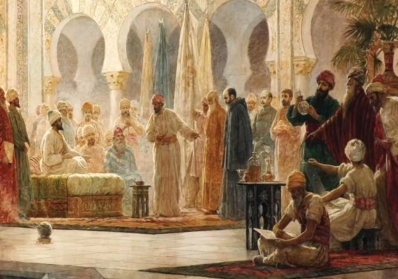
The Islamic Golden Age (roughly 8th to 13th centuries CE) stands as a remarkable period of intellectual flourishing, and nowhere is this more evident than in the revolutionary advancements made in the fields of medicine and mathematics. Driven by a thirst for knowledge, building upon classical traditions, and employing rigorous scientific inquiry, scholars of this era laid the very foundations for many of the medical and mathematical concepts we utilize today. Their contributions were not mere translations; they were transformative innovations that propelled human understanding forward.
Medicine: From Ancient Theories to Scientific Practice:
Before the Golden Age, medical knowledge in many parts of the world was a blend of superstition and rudimentary observation. Islamic scholars, however, approached medicine with a new level of systematic inquiry and empirical investigation:
-
Translation and Synthesis: They meticulously translated the works of Galen, Hippocrates, and other Greek physicians into Arabic. Crucially, they didn't just preserve this knowledge; they critically analyzed, expanded upon, and corrected it based on their own observations and experiments.
-
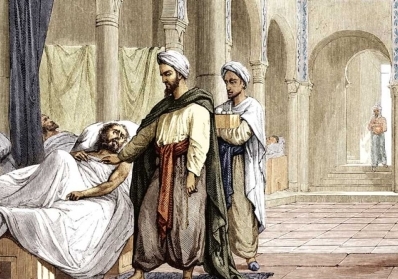
The Rise of Hospitals (Bimaristans): Perhaps one of the most significant innovations was the establishment of well-organized hospitals. These "bimaristans" were not merely places to treat the sick but also centers for medical education and research. They featured specialized wards for different ailments, pharmacies, libraries, and even offered care for the mentally ill – a concept far ahead of its time.
-
Pioneering Physicians:
- Al-Razi (Rhazes) (c. 854 – 925/935 CE): A towering figure in medicine, Al-Razi made significant clinical observations. He provided the first accurate descriptions of smallpox and measles, differentiating them as distinct diseases. His comprehensive medical encyclopedia, "Al-Hawi" (The Comprehensive Book), was a standard reference work for centuries. He also emphasized the importance of hygiene and diet.
- Ibn Sina (Avicenna) (c. 980 – 1037 CE): His "Al-Qanun fi al-Tibb" (The Canon of Medicine) was arguably the most influential medical textbook of its time. It synthesized Greek and Islamic medical knowledge into a systematic and comprehensive framework that remained a standard text in Europe until the 17th century. It covered topics ranging from anatomy and physiology to diagnosis and pharmacology.
- Al-Zahrawi (Abulcasis) (c. 936 – 1013 CE): Considered the father of modern surgery, Al-Zahrawi authored "Kitab al-Tasrif" (The Book of Surgery), an illustrated encyclopedia detailing numerous surgical procedures, instruments (many of which he invented), and techniques. His work on cauterization, wound management, and obstetrics was groundbreaking.
- Ibn al-Nafis (1213 – 1288 CE): Centuries before William Harvey, Ibn al-Nafis accurately described the pulmonary circulation of blood, detailing how blood moves from the right ventricle of the heart to the lungs and back to the left ventricle.
-
Advancements in Pharmacology: Muslim physicians developed a sophisticated understanding of medicinal plants and compounds. Their pharmacies were well-organized, and they established standardized methods for preparing and dispensing drugs.
Mathematics: Laying the Foundations of Modern Science:
The contributions of Golden Age scholars to mathematics were equally transformative, providing the essential tools and concepts for scientific progress:
-
The Power of Algebra: Al-Khwarizmi (c. 780 – 850 CE) is rightfully considered the father of algebra. His seminal work, "Kitab al-Jabr wa al-Muqabala" (The Compendious Book on Calculation by Completion and Balancing), provided systematic methods for solving linear and quadratic equations. The very word "algebra" is derived from the Arabic "al-jabr."
-
The Hindu-Arabic Numeral System: The adoption and popularization of the Hindu numeral system, including the crucial concept of zero (borrowed from India), revolutionized arithmetic and made complex calculations possible. Al-Khwarizmi's work played a key role in this adoption.
-
Advancements in Geometry and Trigonometry: Muslim mathematicians built upon the work of Euclid and made significant advancements in geometry. They also developed trigonometry into a distinct branch of mathematics, making crucial contributions to spherical trigonometry, which was essential for astronomy and navigation. Scholars like Al-Battani made significant improvements to trigonometric tables.
-
The Development of Analytic Geometry: While often attributed solely to Descartes in the 17th century, the groundwork for analytic geometry, which links algebra and geometry, was laid by scholars like Ibn al-Haytham (Alhazen) in his work on optics and Omar Khayyam in his algebraic solutions to geometric problems.
-
Combinatorics and Number Theory: Muslim scholars also made contributions to combinatorics (the study of counting and arrangement) and number theory, exploring properties of numbers and their relationships.
A Lasting Legacy:
The scholars of the Islamic Golden Age were not mere transmitters of ancient knowledge; they were critical thinkers, experimenters, and innovators who fundamentally reshaped the fields of medicine and mathematics. Their discoveries and systematizations provided the essential framework upon which later scientific revolutions in Europe and beyond would build. Recognizing their profound contributions is vital to understanding the true history of science and appreciating the interconnectedness of human intellectual endeavor.
Latest Articles


Latest Updates in Online Courses and Education.
For centuries, spanning the early caliphates through the powerful Ottoman, Safavid, and Mughal empires, the realms under Islamic rule played...
Read MoreIslamic art is a captivating expression of faith, culture, and artistic ingenuity that has flourished across centuries and continents. Far...
Read MoreThe story of Islam's expansion from its humble beginnings in the Arabian Peninsula to a global faith with over a...
Read MoreOften overshadowed by dominant narratives, the early history of Islam reveals a vibrant landscape where women were not merely passive...
Read MoreWhile the European Renaissance is often credited as the birthplace of modern science, a vibrant intellectual revolution flourished centuries earlier...
Read MoreIslamic architecture is a breathtaking expression of faith, artistry, and innovation that has left an indelible mark on the global...
Read MoreFor over six centuries, the Ottoman Empire cast a long shadow across continents, its influence stretching from Southeast Europe to...
Read MoreThe vast and rich tapestry of Muslim history is woven with the lives and achievements of countless remarkable individuals who...
Read MoreExploring the Ancient World: Bible History & Archaeology
Uncover the people, places, and events that shaped biblical and ancient history.
Dive into a rich collection of resources on ancient civilizations, biblical archaeology, and historical contexts. From the empires of Babylon and Assyria to the life of Jesus and the early church, discover maps, timelines, commentaries, and scholarly insights that bring the ancient world to life. Explore the intersection of faith, history, and archaeology with our curated articles, maps, and studies.