Islamic Art: A Journey Through the Rich Cultural Heritage
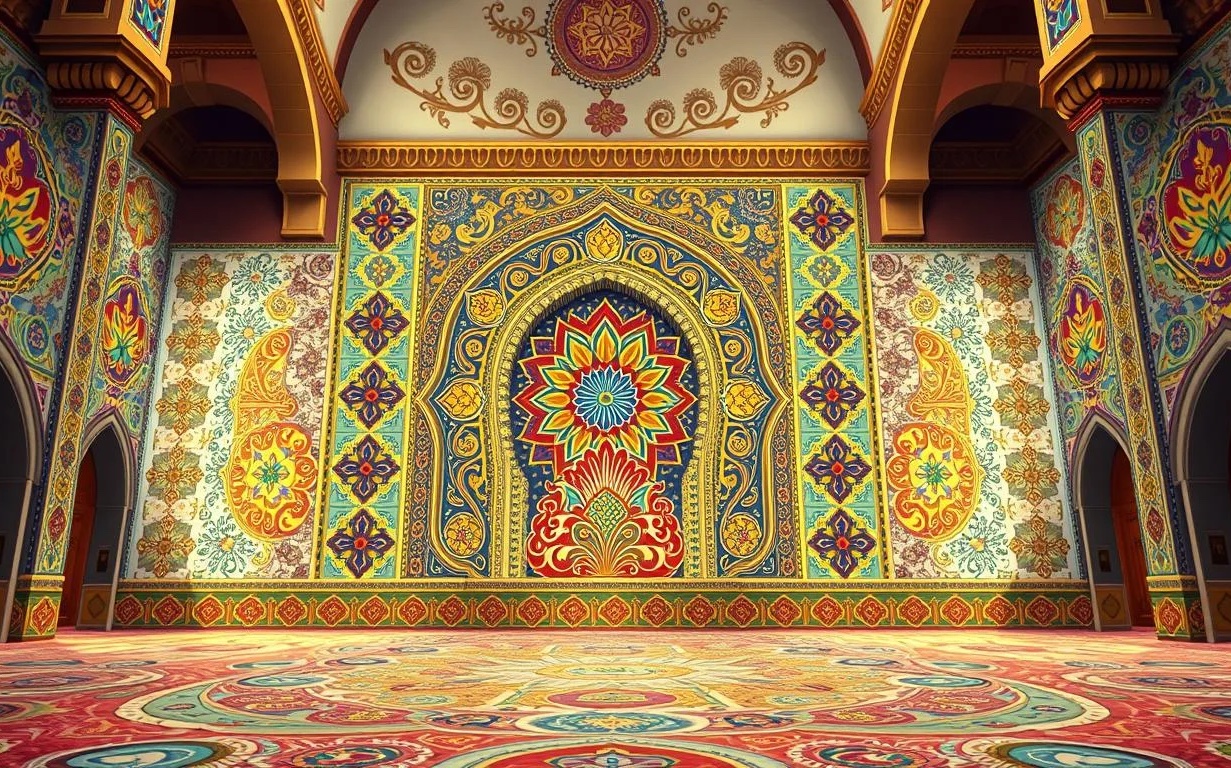
Islamic art is a captivating expression of faith, culture, and artistic ingenuity that has flourished across centuries and continents. Far from being a monolithic style, it encompasses a breathtaking array of forms, techniques, and aesthetics, reflecting the diverse populations and historical contexts of the Muslim world. Embarking on a journey through Islamic art is an exploration of a rich cultural heritage that continues to inspire and enchant.
Beyond Representation: The Essence of Islamic Art:
While figural representation is less common in religious contexts within Islamic art (due to interpretations of religious texts), it is not entirely absent in secular art forms across different periods and regions. Instead, Islamic art excels in other distinctive elements:
-
Calligraphy: Revered as the highest form of artistic expression, calligraphy transforms the beauty of the Arabic script into intricate and meaningful designs. Verses from the Quran, poetry, and proverbs are rendered with exquisite skill on various surfaces, from manuscripts and ceramics to architecture and textiles.
-
Geometric Patterns: Complex and mesmerizing geometric designs, often based on mathematical principles, are a hallmark of Islamic art. These intricate patterns symbolize the underlying order and unity of the universe, creating a sense of harmony and endless repetition.
-
Arabesques: Flowing, curvilinear patterns featuring stylized plant forms, tendrils, and blossoms create a sense of organic vitality and continuous growth. These intricate vegetal designs often intertwine with geometric motifs and calligraphy, forming elaborate compositions.
-
Illumination: The art of decorating manuscripts, particularly the Quran, reached remarkable heights. Intricate borders, vibrant colors, and the use of gold and silver transformed religious texts into dazzling works of art.
-
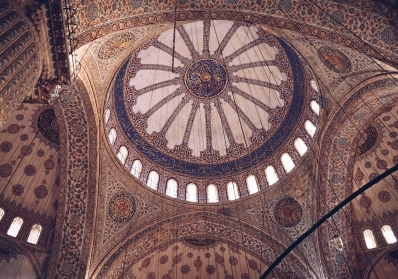
Architecture: As explored in a previous article, Islamic architecture is a testament to engineering prowess and aesthetic vision. From grand mosques and palaces to humble dwellings, structures are adorned with intricate tilework, stucco carvings, muqarnas vaulting, and elegant arches, reflecting both functional needs and spiritual aspirations.
-
Decorative Arts: Islamic artistic expression extends to a wide range of decorative arts, including ceramics with their vibrant glazes and intricate designs, metalwork featuring inlaid patterns and calligraphy, textiles with rich colors and symbolic motifs, and glassware of exquisite craftsmanship.
A Tapestry of Styles and Influences:
The vast geographical expanse and long history of the Muslim world have resulted in a diverse tapestry of artistic styles:
-
Early Islamic Art (7th-11th Centuries): This period saw the synthesis of pre-Islamic artistic traditions (Byzantine, Sasanian, Coptic) with emerging Islamic aesthetics. The Dome of the Rock and early Abbasid art exemplify this fusion.
-
The Art of Al-Andalus (8th-15th Centuries): The Islamic civilization in the Iberian Peninsula produced a unique and sophisticated artistic style characterized by intricate stucco work, horseshoe arches, and serene courtyards, as seen in the Alhambra and the Great Mosque of Córdoba.
-
The Art of the Fatimids (10th-12th Centuries): This Shi'a dynasty in Egypt and North Africa fostered a distinctive artistic style known for its naturalistic motifs, rock crystal carvings, and intricate metalwork.
-
Seljuk and Ilkhanid Art (11th-14th Centuries): In Persia and Anatolia, these Turkic and Mongol-influenced dynasties developed styles characterized by intricate stucco decoration, glazed tiles with figural elements (in secular contexts), and the emergence of the Persian miniature painting tradition.
-
Timurid Art (14th-16th Centuries): Under the Timurid dynasty in Central Asia, art flourished, particularly manuscript illumination and architecture featuring vibrant tilework and monumental scale.
-
Ottoman Art (14th-20th Centuries): The Ottoman Empire developed a grand and elegant artistic style characterized by Iznik ceramics with their distinctive floral patterns, impressive imperial mosques with their soaring domes and minarets, and refined calligraphy.
-
Safavid Art (16th-18th Centuries): In Persia, the Safavid dynasty oversaw a golden age of art, renowned for its exquisite miniature painting, intricate carpet weaving, and the stunning tilework of its mosques and palaces in Isfahan.
-
Mughal Art (16th-19th Centuries): In the Indian subcontinent, the Mughal emperors patronized a unique blend of Islamic, Persian, and Indian artistic traditions, evident in the intricate architecture of the Taj Mahal, the detailed miniature paintings, and the luxurious textiles.
The Enduring Legacy:
Islamic art is not merely a historical phenomenon; its influence continues to resonate in the contemporary world. Its emphasis on abstract patterns, the beauty of calligraphy, and the harmonious integration of art and architecture have inspired artists and designers across cultures and time periods. Museums around the globe house magnificent collections that testify to the enduring power and beauty of this rich cultural heritage.
By exploring the diverse forms and intricate details of Islamic art, we gain a deeper appreciation for the creativity, intellectual sophistication, and spiritual depth of the civilizations that produced it. It is a journey through a world of beauty that transcends time and continues to captivate the hearts and minds of those who encounter it.
Latest Articles
Latest Updates in Online Courses and Education.
For centuries, spanning the early caliphates through the powerful Ottoman, Safavid, and Mughal empires, the realms under Islamic rule played...
Read MoreThe Islamic Golden Age (roughly 8th to 13th centuries CE) stands as a remarkable period of intellectual flourishing, and nowhere...
Read MoreThe story of Islam's expansion from its humble beginnings in the Arabian Peninsula to a global faith with over a...
Read MoreOften overshadowed by dominant narratives, the early history of Islam reveals a vibrant landscape where women were not merely passive...
Read MoreWhile the European Renaissance is often credited as the birthplace of modern science, a vibrant intellectual revolution flourished centuries earlier...
Read MoreIslamic architecture is a breathtaking expression of faith, artistry, and innovation that has left an indelible mark on the global...
Read MoreFor over six centuries, the Ottoman Empire cast a long shadow across continents, its influence stretching from Southeast Europe to...
Read MoreThe vast and rich tapestry of Muslim history is woven with the lives and achievements of countless remarkable individuals who...
Read MoreExploring the Ancient World: Bible History & Archaeology
Uncover the people, places, and events that shaped biblical and ancient history.
Dive into a rich collection of resources on ancient civilizations, biblical archaeology, and historical contexts. From the empires of Babylon and Assyria to the life of Jesus and the early church, discover maps, timelines, commentaries, and scholarly insights that bring the ancient world to life. Explore the intersection of faith, history, and archaeology with our curated articles, maps, and studies.