Muslim Contributions to Science and Technology: The Forgotten Pioneers
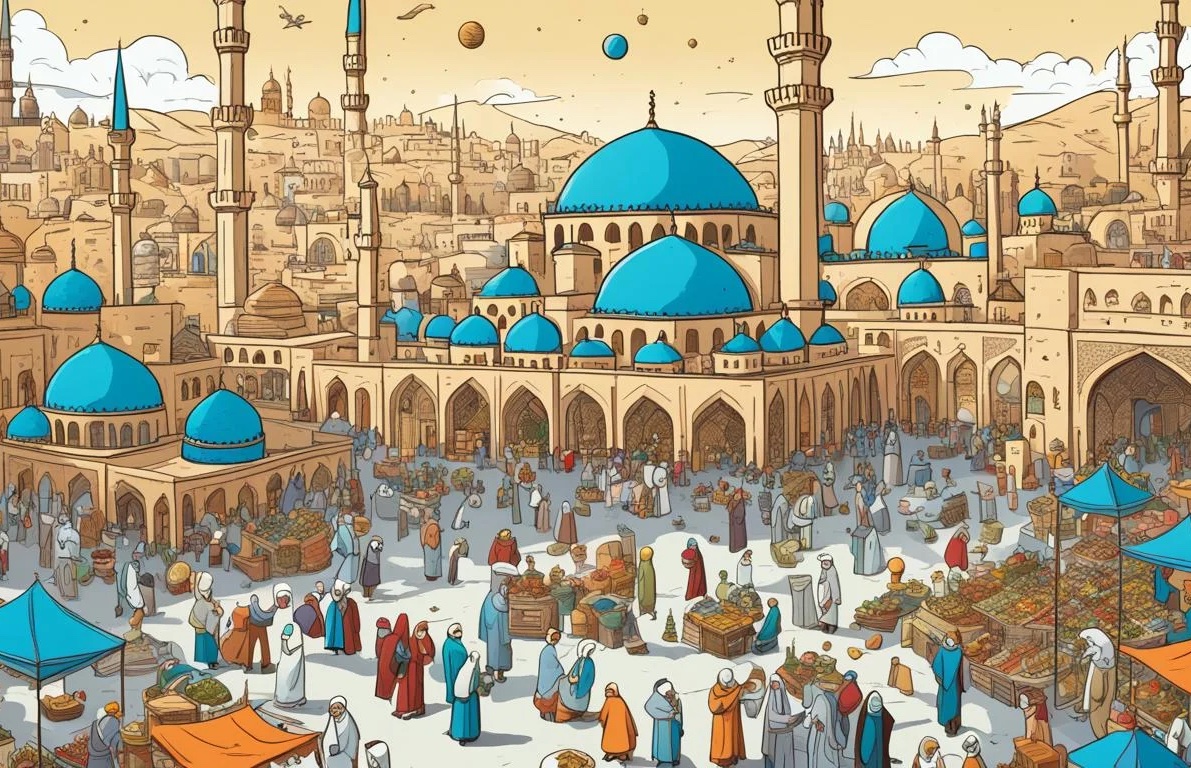
While the European Renaissance is often credited as the birthplace of modern science, a vibrant intellectual revolution flourished centuries earlier in the Muslim world. During the period often referred to as the Islamic Golden Age (roughly 8th to 13th centuries CE), scholars and thinkers made groundbreaking advancements across a vast spectrum of scientific and technological fields, laying the essential groundwork for many innovations we take for granted today. These "forgotten pioneers" deserve recognition for their profound and lasting impact on human knowledge.
Preserving and Expanding Ancient Wisdom:
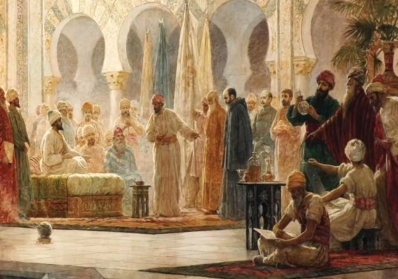
One of the earliest and most crucial contributions of Muslim scholars was the translation and preservation of classical Greek, Roman, Indian, and Persian texts. Institutions like the House of Wisdom in Baghdad became centers of translation, meticulously safeguarding invaluable knowledge in fields such as philosophy, mathematics, astronomy, and medicine. Without this intellectual stewardship, many of these foundational works might have been lost to history.
Groundbreaking Advancements Across Disciplines:
Beyond preservation, Muslim scholars were prolific innovators who made significant leaps forward in various scientific and technological domains:
-
Mathematics: As mentioned before, Al-Khwarizmi's work on algebra and the introduction of the Hindu-Arabic numeral system (including the concept of zero) revolutionized mathematics. His name even gave us the word "algorithm." Muslim mathematicians also made advancements in geometry, trigonometry, and number theory.
-
Astronomy: Observatories were established across the Muslim world, leading to more accurate star charts, advancements in understanding celestial mechanics, and the development of sophisticated astronomical instruments like the astrolabe, which was crucial for navigation and timekeeping. Scholars like Al-Battani made precise measurements of the solar year and stellar movements.
-
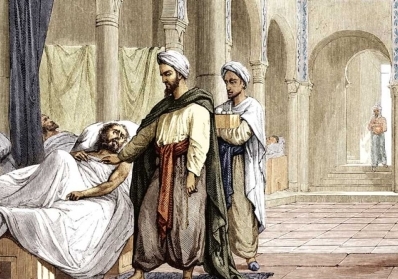
Medicine: Islamic medicine reached unprecedented heights. Ibn Sina (Avicenna)'s "Canon of Medicine" was a comprehensive encyclopedia that remained a standard medical text for centuries. Al-Razi (Rhazes) made significant clinical observations, differentiated between smallpox and measles, and emphasized the importance of hygiene. Muslim surgeons developed advanced techniques, and their understanding of pharmacology was far ahead of its time. Hospitals (bimaristans) were established as centers of learning and patient care, offering organized treatment and even specialized wards.
-
Optics: Ibn al-Haytham (Alhazen)'s "Book of Optics" fundamentally changed the understanding of vision. He used scientific experimentation to demonstrate that vision occurs because light rays travel from objects to the eye, contradicting earlier Greek theories. His work laid the foundation for modern optics and influenced later European scientists.
-
Chemistry (Alchemy): While early alchemy had mystical elements, Muslim scholars transformed it into a more systematic and experimental science. Figures like Jabir ibn Hayyan (Geber) are credited with numerous chemical discoveries and the development of laboratory equipment and processes like distillation and crystallization.
-
Engineering and Technology: Muslim engineers and inventors developed innovative technologies for irrigation, water management (like norias and underground canals), and construction. They also made advancements in mechanical devices, including early forms of water clocks and automata. Al-Jazari's "Book of Ingenious Mechanical Devices" described numerous automated contraptions and robots.
-
Agriculture: Muslim agricultural scientists made significant contributions to botany and agronomy. They introduced new crops to different regions, developed advanced irrigation techniques, and wrote extensively on agricultural practices, soil science, and plant breeding.
The Transmission of Knowledge to Europe:
The knowledge developed and preserved in the Muslim world played a crucial role in the European Renaissance. Translations of Arabic texts into Latin brought groundbreaking scientific and mathematical ideas to Europe, sparking intellectual curiosity and contributing to the Scientific Revolution. Concepts like algebra, the decimal system, and advancements in medicine and astronomy were transmitted through this exchange.
Reclaiming the Narrative:
It is crucial to recognize and celebrate the contributions of these "forgotten pioneers." Their intellectual legacy is not just a part of Muslim history; it is an integral chapter in the history of human progress. By acknowledging their profound impact on science and technology, we gain a more complete and accurate understanding of the roots of our modern world and inspire future generations to pursue knowledge and innovation across all cultures and backgrounds.
Latest Articles
Latest Updates in Online Courses and Education.
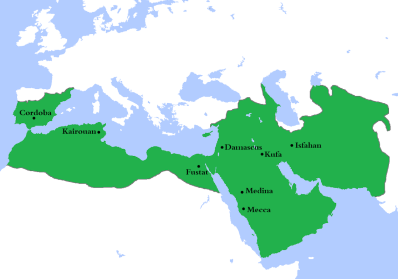
For centuries, spanning the early caliphates through the powerful Ottoman, Safavid, and Mughal empires, the realms under Islamic rule played...
Read MoreThe Islamic Golden Age (roughly 8th to 13th centuries CE) stands as a remarkable period of intellectual flourishing, and nowhere...
Read MoreIslamic art is a captivating expression of faith, culture, and artistic ingenuity that has flourished across centuries and continents. Far...
Read MoreThe story of Islam's expansion from its humble beginnings in the Arabian Peninsula to a global faith with over a...
Read MoreOften overshadowed by dominant narratives, the early history of Islam reveals a vibrant landscape where women were not merely passive...
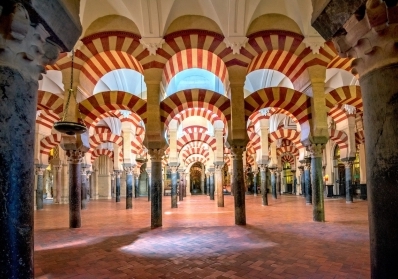
Read MoreIslamic architecture is a breathtaking expression of faith, artistry, and innovation that has left an indelible mark on the global...
Read MoreFor over six centuries, the Ottoman Empire cast a long shadow across continents, its influence stretching from Southeast Europe to...
Read MoreThe vast and rich tapestry of Muslim history is woven with the lives and achievements of countless remarkable individuals who...
Read MoreExploring the Ancient World: Bible History & Archaeology
Uncover the people, places, and events that shaped biblical and ancient history.
Dive into a rich collection of resources on ancient civilizations, biblical archaeology, and historical contexts. From the empires of Babylon and Assyria to the life of Jesus and the early church, discover maps, timelines, commentaries, and scholarly insights that bring the ancient world to life. Explore the intersection of faith, history, and archaeology with our curated articles, maps, and studies.